When people in Dublin, CA start looking into security window film, one of the first questions is: what thickness safety film do I actually need? That is the right question. Too many window film companies oversimplify this and act like thicker automatically means “better.” That is sloppy thinking.
The truth is more specific. The right safety film thickness in Dublin CA depends on the type of glass, the risk you are trying to reduce, the framing, the installation method, and whether the project is residential or commercial.
If your goal is realistic protection, not marketing hype, here is how to think about 4 mil vs 8 mil vs 12 mil safety film.
First: What Safety Film Actually Does
Safety and security film is designed to help hold broken glass together after impact. It is installed on the interior side of the glass using a strong pressure-sensitive adhesive, and when the glass breaks, the film helps retain fragments and reduce dangerous flying shards. The IWFA guide is explicit that safety film is meant to mitigate the harmful consequences of broken glass, not make glass unbreakable.
That distinction matters.
A lot of customers assume thicker film means the window cannot be broken. Wrong. Even very thick safety film does not make standard glass burglar-proof or bulletproof. What it typically does is:
- reduce glass shatter hazards
- help hold broken glass in place
- slow down entry in some scenarios
- improve containment compared to untreated glass
That is useful. But it is not magic.
Why Thickness Matters
Safety film is commonly available in multiple thicknesses. Avery Dennison’s interior product schedule, for example, includes clear safety films in 4 mil, 7 mil, 8 mil, 11 mil, 12 mil, and 15 mil versions, with residential lifetime coverage and commercial warranties on many of those lines.
Thickness matters because, in general, thicker film can provide greater fragment retention and better resistance once the glass is broken. The IWFA safety guide explains that safety films range from about 4 mil up to 15 mil and that thicker or multi-ply constructions generally improve the film’s ability to absorb impact energy before reaching burst strength.
But thickness alone is not the whole system. This is where most bad advice starts.
4 Mil Safety Film: Basic Hazard Reduction
A 4 mil safety film is usually the entry-level option.
This thickness is often suitable when the main goal is basic glass fragment retention rather than a major forced-entry delay strategy. In plain English, 4 mil film is usually for customers who want the glass to stay together better if it cracks or breaks, not for those expecting serious break-in resistance.
Best fit for 4 mil safety film
- homeowners wanting basic shatter reduction
- low-risk interior glass areas
- glass where the goal is improved safety rather than security
- smaller residential projects with moderate expectations
Limits of 4 mil film
- less robust than thicker films for aggressive impact scenarios
- not the best choice if forced-entry delay is a major goal
- may not be ideal where the customer expects substantial smash-and-grab resistance
For many Dublin CA homes, 4 mil can make sense on lower-risk panes where the objective is simply better containment and safer breakage behavior.
8 Mil Safety Film: The Practical Middle Ground
An 8 mil safety film is often where the conversation gets more serious.
This thickness is a strong middle-ground option for customers who want more than basic shatter retention but do not necessarily need the heavier build of 12 mil or thicker film. It is often a practical answer for both residential and light commercial applications.
Best fit for 8 mil safety film
- homeowners wanting stronger glass-holding performance
- sidelights and vulnerable lower windows
- retail or office glass where added delay matters
- projects balancing performance, cost, and appearance
Why 8 mil is often a smart recommendation
It usually gives a noticeable step up from 4 mil without jumping all the way into the heavier, more expensive end of the category. For many real-world jobs in Dublin CA, that makes it the most rational option.
Not the cheapest. Not the thickest. Just often the most defensible.
12 Mil Safety Film: Heavier-Duty Protection
A 12 mil safety film is for customers who want a more aggressive level of glass containment and performance after breakage.
This thickness is commonly considered when the risk profile is higher, the glass areas are more exposed, or the property owner wants a more serious security-oriented setup.
Best fit for 12 mil safety film
- storefronts and commercial entry glass
- vulnerable first-floor commercial glazing
- higher-risk residential applications
- customers prioritizing stronger post-break glass retention
Where 12 mil makes the most sense
In commercial settings, 12 mil often makes more sense than in standard residential jobs because the exposure and consequences can be greater. For example, a retail storefront, office entry, or glass near public access points may justify a thicker film more easily than a typical bedroom window in a quiet neighborhood.
That said, there are residential situations where 12 mil is justified too, especially if the owner is focused on delaying entry or protecting larger exposed panes.
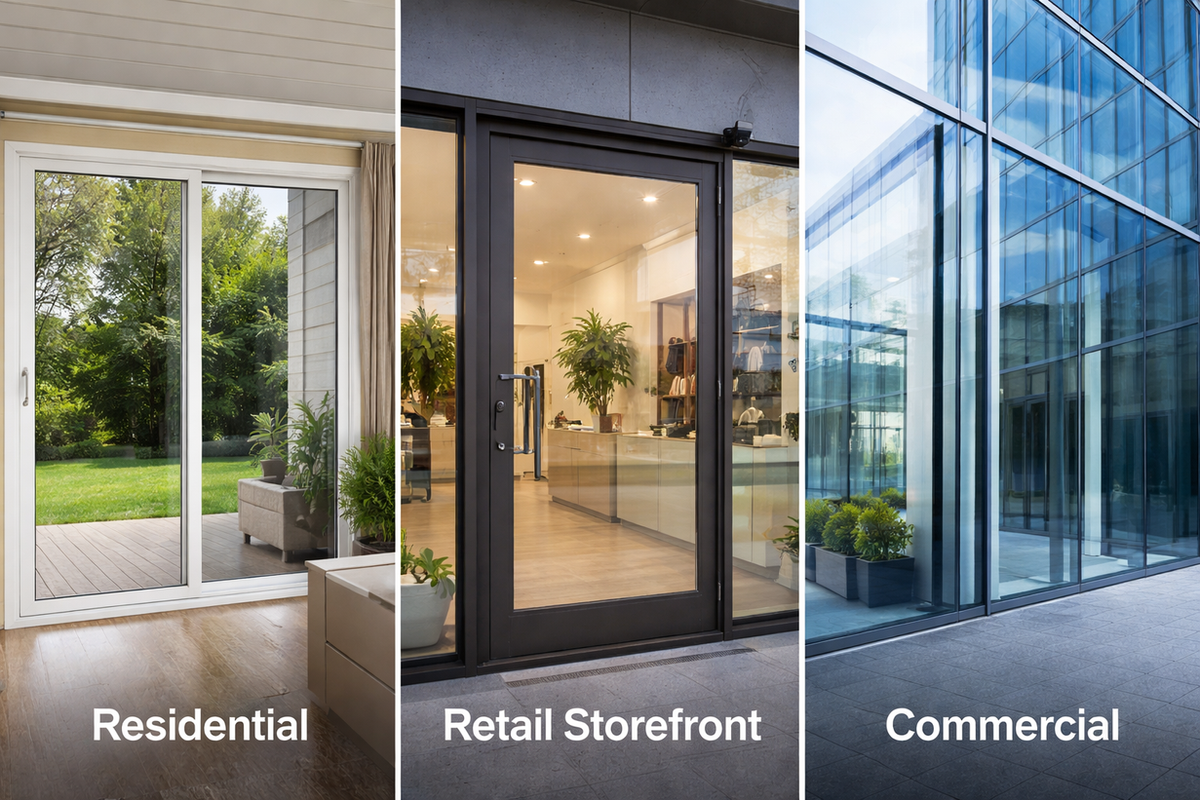
Residential vs Commercial: Stop Treating Them the Same
This is another place where people get lazy.
A home and a commercial property are not the same problem.
Residential safety film in Dublin CA
Most homeowners are usually trying to address one or more of these concerns:
- safer glass breakage
- better protection from accidental impact
- deterrence against quick smash-and-reach access
- improved peace of mind without changing the look of the home too much
For many residential jobs, 4 mil or 8 mil may be enough depending on the glass location and the customer’s expectations.
Commercial safety film in Dublin CA
Commercial properties usually have different concerns:
- larger panes of glass
- more public exposure
- storefront vulnerability
- liability reduction
- better delay against fast forced entry
That often pushes the recommendation toward 8 mil or 12 mil, depending on the risk level and the actual glazing system.
The Glass and Frame Matter More Than Customers Think
Here is the part most people ignore: the film is only part of the system.
The IWFA safety guide explains that safety film performance can be enhanced through installation techniques that attach the film to the framing system, and it also notes that standard daylight installations typically stop at the visible glass area rather than extending within the frame.
That means this is not just about whether you bought 4 mil, 8 mil, or 12 mil film. It also matters:
- what type of glass you have
- how the frame is built
- whether the glass is annealed, tempered, laminated, or insulated
- whether the installation is standard edge-to-edge or part of a more reinforced system
If someone recommends thickness without evaluating the actual glass and frame, they are skipping the hard part and selling you theater.
Thicker Film Does Not Override Compatibility Rules
Another critical point: not every film should go on every piece of glass.
Manufacturer compatibility charts exist for a reason. Avery Dennison’s film-to-glass chart, for example, shows that some safety and solar safety films are compatible only on certain glazing types, and some combinations are conditional, tempered-only, or unwarranted for seal failure.
So if a salesperson acts like thicker film is always safer, that is incomplete at best.
A bad film-to-glass match can create risk, void coverage, or leave you with a system the manufacturer will not fully stand behind.
What About Warranties?
Warranty language also matters because it tells you what the manufacturer is actually willing to stand behind.
For example:
- Avery Dennison’s schedule shows interior safety film lines with residential lifetime and commercial term coverage on many products.
- Edge’s residential titanium warranty states that its safety/security, graffiti, exterior, and decorative lines are excluded from that limited lifetime film warranty, which is exactly why customers should read the actual product-specific warranty instead of assuming all films are covered the same way.
That is why blanket statements like “all security film has a lifetime warranty” are nonsense.
So What Safety Film Thickness Do You Need?
Here is the practical breakdown.
Choose 4 mil if:
- your main goal is basic shatter resistance
- you want safer breakage behavior
- the glass is lower risk
- you are not expecting major forced-entry delay
Choose 8 mil if:
- you want a real step up in protection
- you want a strong residential or light commercial option
- you care about both safety and moderate security improvement
- you want the best balance between cost and performance
Choose 12 mil if:
- the glass is in a more exposed or higher-risk area
- you want heavier-duty containment after breakage
- the project is commercial or security-focused
- you understand that thicker film still needs the right glass and installation system
The Best Answer Is Not Always the Thickest
If your goal is realistic performance, the answer is not “buy the thickest film available.” The answer is: match the film thickness to the actual risk, the actual glass, and the actual building use.
For many homes in Dublin CA, 8 mil ends up being the sweet spot. For some projects, 4 mil is enough. For others, especially more exposed commercial glass, 12 mil is the better call.
The only serious way to choose the right safety film thickness in Dublin CA is to evaluate the application honestly instead of defaulting to the biggest number.
Final Thought
If you are comparing 4 mil vs 8 mil vs 12 mil safety film, do not ask only which one is strongest. Ask:
- what problem am I actually trying to solve?
- what type of glass do I have?
- is this a residential or commercial risk profile?
- is the recommendation based on real compatibility and installation requirements?
Those are the questions that lead to the right answer.
If you want help choosing the right safety film thickness in Dublin CA, Low Price Window Tint can review your glass, explain the tradeoffs clearly, and recommend the option that fits your real-world goals instead of overselling thickness for the sake of a bigger ticket.