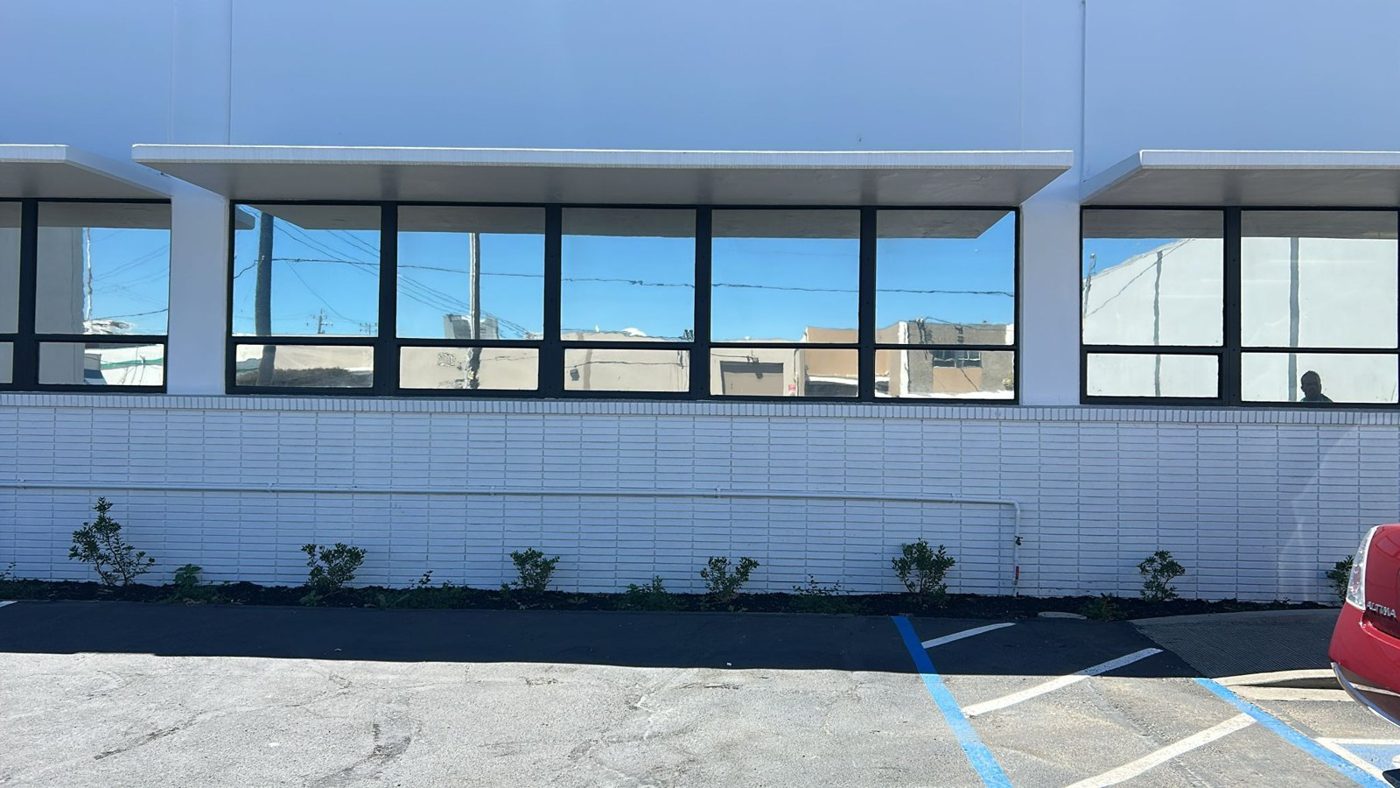
Concord runs hotter than most of the East Bay in the afternoon. It sits inland at the end of Highway 4, away from the Bay's cooling influence, and much of its commercial stock is exactly the kind that struggles with sun: single-story office and flex buildings, storefront strips with plate-glass entries, and warehouse or distribution units with long ribbon windows facing west. Add acres of asphalt bouncing heat back into the glass and the rooms along the sunny elevations become the hardest spaces in the building to keep comfortable.
Window film is the retrofit that fixes this without replacing windows. Here is how it plays out on Concord commercial glass, and what to ask for on an estimate.
What Concord commercial buildings usually deal with
Across the estimates we walk in Concord, the same issues come up, often in the same building:
- Afternoon heat gain. West and south elevations load up with solar heat from early afternoon on, and the HVAC runs overtime trying to keep up.
- Glare on screens. Direct sun washes out monitors, makes conference rooms unusable for part of every day, and turns reception glass into a mirror for visitors.
- Fading interiors. UV is the largest single cause of fading on carpet, furniture, product displays, and lobby finishes. Quality solar control film blocks more than 99% of UV.
- Ground-floor exposure. Storefront entries and street-facing glass are where break-ins, tagging, and prying attempts happen, and the glass is often the weakest point.
- Tenant comfort complaints. In multi-tenant buildings, the sun-side suites are the ones that drive renewal conversations.
What window film actually changes
Film changes the solar behavior of existing glass: how much heat passes through, how much light comes in, how much glare is cut, and how the pane responds if it is struck. The numbers that matter are on the manufacturer's spec sheet — total solar energy rejected, visible light transmission, and UV rejection — not how dark the film looks from the parking lot. We walk those numbers with you on the estimate so options can be compared directly. Here is how to read window film ratings before committing to a product.
Choosing the right film for a Concord building
Different buildings need different films, and we quote more than one option whenever the trade-off is real:
- Spectrally selective ceramic films reject a large share of solar heat while staying visually clear — the right call when you want daylight and the view, and when building standards limit exterior reflectance.
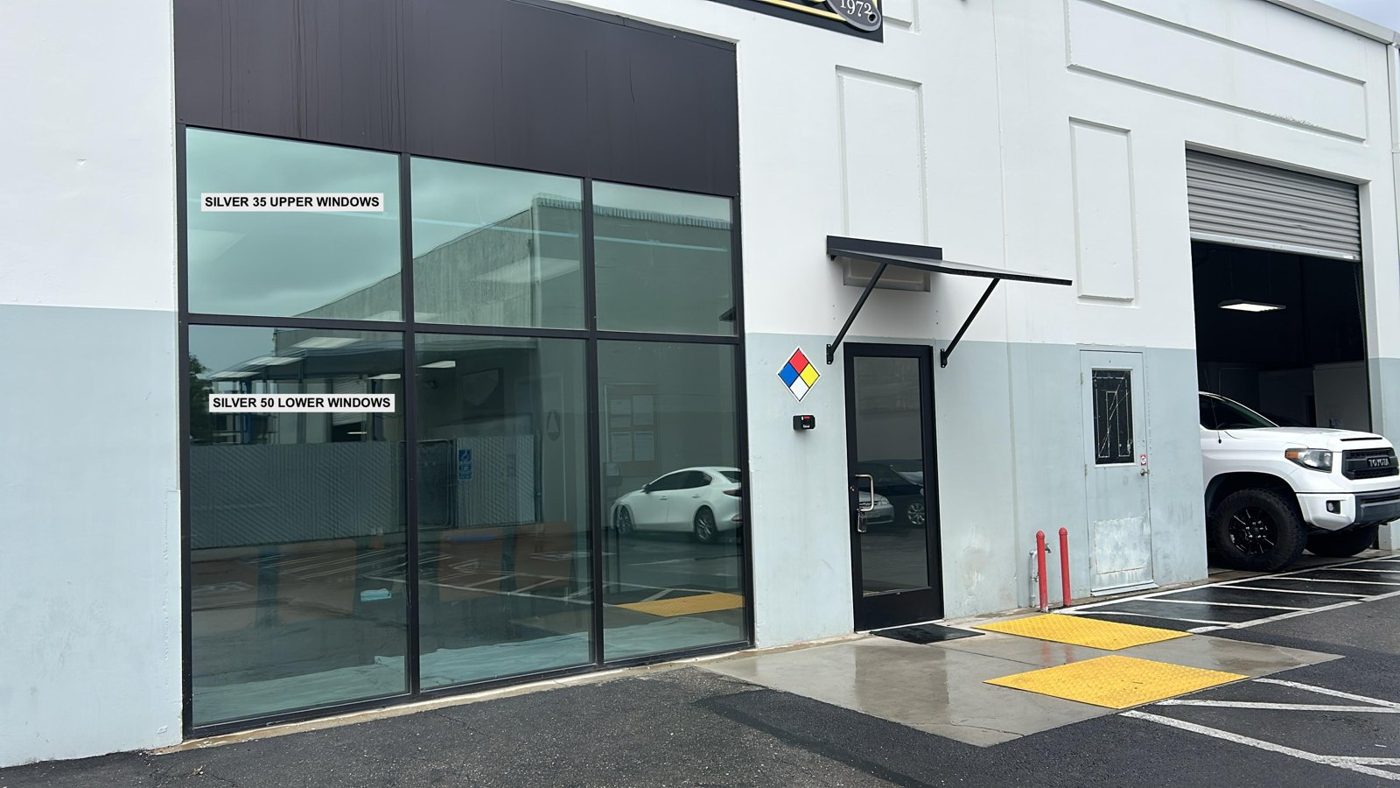
- Reflective and dual-reflective films such as Silver 20, Silver 35, and Silver 50 cut heat hard and give daytime privacy on exterior glass, with a calmer, low-reflectance view from inside.
- Frosted and decorative films add privacy to interior partitions, conference rooms, and reception glass while still passing daylight.
On sites with artificial turf, vinyl siding, or close neighboring property, we check the reflection angle before quoting a reflective film — concentrated reflection can melt turf and warp siding, which is why turf protection belongs in the conversation on some properties. We install professional-grade films from manufacturers including Solar Gard, Huper Optik, and Avery Dennison, with manufacturer warranty coverage on commercial work.
Storefront, entry, and ground-floor glass
Concord's retail strips and ground-floor offices have a different problem than an office park: exposure. Safety and security window film bonds to the glass and holds shards together if a pane is struck, which slows a smash-and-grab and keeps broken glass from scattering across the floor. Anti-graffiti film acts as a sacrificial layer over the glass — tagging, scuffing, and etching hit the film instead of the window, and it peels off and gets replaced far more cheaply than polishing or swapping the pane.
Landlords, property managers, and approvals
Most Concord commercial space is leased, so the property manager or owner usually has to approve the film. We supply manufacturer spec sheets with visible light transmission and exterior reflectance for every film we propose, so approvals move quickly, and we can recommend low-reflectance options where building standards require them. We also check the glass itself: some dual-pane and low-E assemblies have thermal limits that rule out certain films, and it is far better to identify that during the estimate than after installation. Read our guidance on dual-pane glass and window film. Property managers coordinating work across several buildings can send the details through our property manager quote page.
Installation around your business hours
Commercial tinting rarely means shutting down. We work elevation by elevation, clear a strip of desk or display space along the glass, and move on. Occupied floors can be scheduled in the evenings or on weekends, and a single conference room or executive suite is often finished in a few hours. Most Concord buildings take one to three days depending on size, access, and how many elevations are treated. The film then cures over several days — light haziness or small water pockets clear on their own.
Film versus replacing the windows
New windows solve the same problems at a much higher price. Here is the honest comparison — where film wins, where new glass is genuinely the better call, and how the payback math works out for window film energy savings.
Getting a Concord estimate
A useful estimate starts on site: we look at the elevations causing the problem, identify the glass type on each one, and quote film matched to the glazing and to whatever the building requires. Bring what you know — which rooms run hot, whether the glass is dual-pane, who signs off — and we handle the rest with a written scope. We are based in Dublin and serve Concord, Pleasant Hill, Martinez, Walnut Creek, Lafayette, Alamo, Danville, and San Ramon. Call or text 925-515-2979 to set a time. Looking to tint a Concord home instead? Start at our Concord window tinting page.