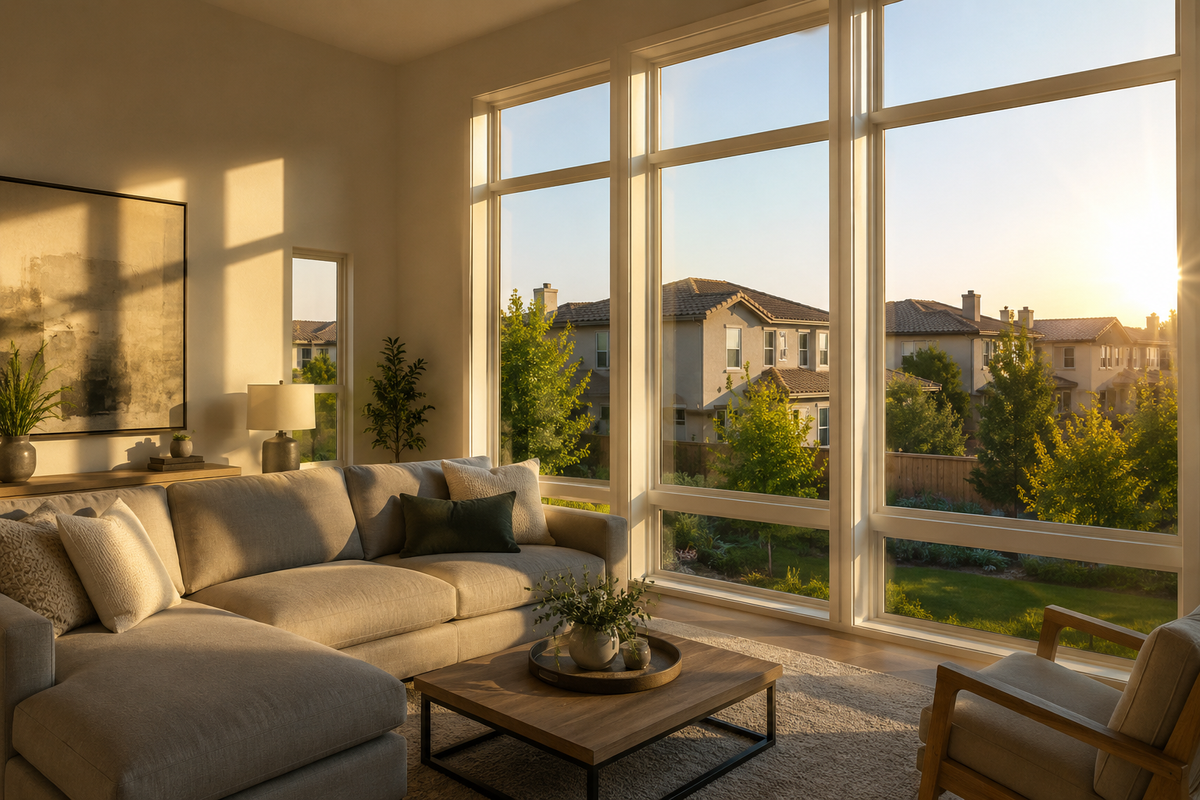
If you live in Dublin, CA and have west-facing windows, you already know the problem. Around 2–6 PM, certain rooms become almost unusable from excessive heat, glare, and harsh afternoon sun. Hardwood floors fade faster, furniture overheats, and air conditioning systems work overtime trying to keep up.
West-facing glass is usually the hardest exposure to manage in the Bay Area because the afternoon sun carries intense solar heat at lower angles directly into the home. Standard blinds or curtains may reduce light, but they do very little to stop the actual heat entering through the glass.
The right window film can dramatically reduce heat and glare while still preserving natural light and views—but choosing the wrong film can lead to disappointing performance, excessive reflectivity, or even glass compatibility issues.
Why West-Facing Windows Get So Hot
Most homeowners assume the problem is simply “sunlight,” but the real issue is solar energy passing through untreated glass.
When sunlight hits a window, three things happen:
- Some energy is reflected
- Some is absorbed
- Some passes directly through the glass
Industry standards refer to this as the “RAT” principle:Reflectance + Absorption + Transmittance = 100%.
The heat you feel inside your home is primarily caused by:
- Infrared solar energy
- Visible light entering the room
- Solar absorption heating the glass itself
According to IWFA educational standards, roughly:
- 44% of solar energy is visible light
- 53% is infrared heat
- 3% is ultraviolet radiation
That is why west-facing windows can feel like radiators in the afternoon.
What Makes a Good Film for West-Facing Windows?
The best film depends on your priorities:
If Your Goal Is Maximum Heat Rejection
Reflective films usually provide the highest overall heat rejection at the lowest cost.
Examples include:
- Silver reflective films
- Dual reflective films
- Exterior reflective films
These films can reject massive amounts of solar energy but create a more mirrored appearance from the exterior.
If Your Goal Is Heat Reduction Without Darkening the Home
Spectrally selective ceramic films are usually the best solution.
These films:
- Maintain a lighter, more natural appearance
- Reduce significant heat
- Preserve daylight
- Reduce fading
- Avoid the “mirror look”
This category is usually preferred in higher-end residential projects where aesthetics matter.
Best Film Types for Dublin, CA Homes
1. Ceramic Window Film (Best Overall Balance)
For most west-facing residential windows in Dublin, ceramic film is usually the best overall solution.
High-quality ceramic films:
- Reduce heat significantly
- Maintain clear views
- Reduce glare
- Reject over 99% UV rays
- Avoid heavy exterior reflectivity
Examples of ceramic and spectrally selective films commonly used in residential applications include:
- PureVue Ceramic
- Xenith IR Ceramic
- PerLite Ceramic
- e-Lite Spectrally Selective films
The major advantage is comfort without making the home feel dark.
2. Dual Reflective Film (Best for Strong Afternoon Glare)
Dual reflective films are ideal when:
- Afternoon glare is severe
- The room overheats heavily
- Homeowners want stronger daytime privacy
These films maintain a softer interior appearance at night compared to traditional mirror films while still offering strong solar performance.
Examples include:
- Ultra View series
- OptiTune series
- TrueVue series
3. Exterior Film (Best for Turf Protection & Extreme Heat)
In some Dublin homes—especially newer homes with large Low-E dual-pane windows—exterior film may be the best option.
Exterior films:
- Stop solar energy before it enters the glass
- Reduce turf melting risk
- Lower exterior glass temperatures
- Improve performance on difficult west exposures
However, exterior films require proper edge sealing and professional film-to-glass compatibility review.
The Biggest Mistake Homeowners Make
The biggest mistake is buying film based only on:
- Darkness
- Infrared rejection marketing
- Cheap online film claims
A darker film does NOT automatically mean better heat rejection.
Many low-cost films advertise “95% IR rejection” but perform poorly in real-world total solar energy rejection.
The number that matters most is usually:
TSER — Total Solar Energy Rejected
TSER gives a much more realistic indication of actual heat reduction performance.
Not All Windows Are Safe to Tint
This is critical.
Certain dual-pane, tempered, tinted, or Low-E windows can experience increased thermal stress if incompatible film is installed.
Professional installers should always verify:
- Glass type
- Tempered vs annealed glass
- Dual-pane configuration
- Existing coatings
- Film-to-glass compatibility
Avery Dennison and other manufacturers publish detailed compatibility charts specifically because not every film is safe on every type of glass.
This is especially important for:
- Large west-facing windows
- Floor-to-ceiling glass
- Darker films
- Existing Low-E windows
What We Typically Recommend for Dublin Homes
Best Overall Residential Option
- Ceramic or spectrally selective film
- Best for homeowners who want comfort without darkening the home
Best Budget Performance Option
- Dual reflective film
- Excellent heat rejection at lower cost
Best Extreme Heat Option
- Exterior reflective film
- Best for severe west exposure or turf reflection problems
Best View Preservation Option
- Light ceramic film (50–70 VLT range)
- Maintains natural daylight while reducing heat
Final Thoughts
West-facing windows are usually the most difficult windows in the home to manage. The right film can dramatically improve:
- Afternoon comfort
- Energy efficiency
- Glare reduction
- Furniture fading protection
- Overall room usability
But the best film is not always the darkest or most expensive option. The correct solution depends on:
- Glass type
- Sun exposure
- Desired appearance
- Heat reduction goals
- Daytime privacy expectations
- Budget
At Low Price Window Tint, we help homeowners throughout Dublin, Pleasanton, San Ramon, Livermore, and the Tri-Valley choose films based on actual performance and glass compatibility—not marketing hype.
To schedule a residential consultation or request a quote, contact Low Price Window Tint today.