If one room in your Dublin or East Bay home feels hotter than the rest of the house, the problem is often the glass — not your air conditioner.
Large windows, sliding glass doors, sunrooms, and west-facing windows can let in enough solar heat to make a room uncomfortable even when the AC is running. We see this often in homes throughout Dublin, Pleasanton, San Ramon, Livermore, Danville, Brentwood, Walnut Creek, Concord, and surrounding East Bay areas.
The hard part is not deciding whether window film can help. The hard part is choosing the right type of film.
Some homeowners want maximum heat rejection. Others want a clean, natural look. Some want daytime privacy. Others want to reduce glare without making the room feel dark.
This guide explains the main differences between silver reflective film, ceramic window film, and dual-reflective window film so you can choose the right option for your home.
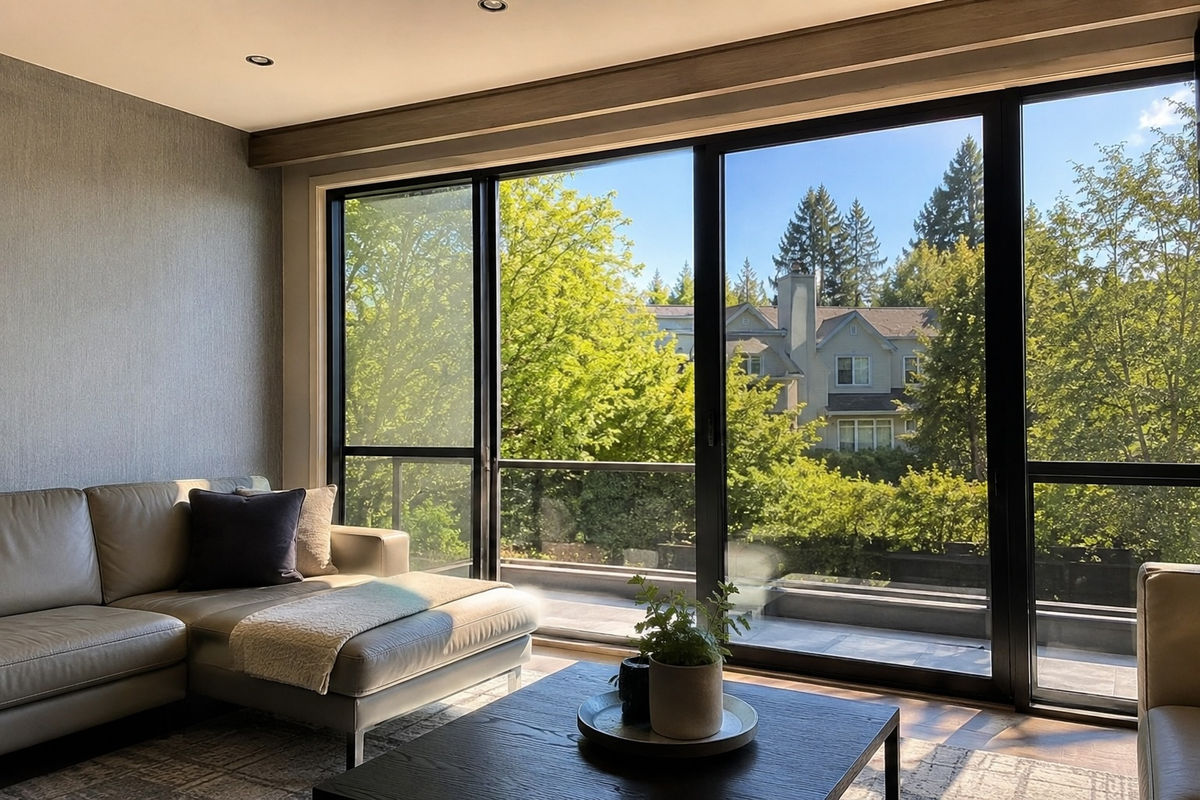
Why Some Rooms Get So Hot
Sunlight does not affect your windows in only one way. When sunlight hits glass, some energy reflects away, some is absorbed by the glass, and some passes directly into the room.
Once solar energy enters the home, it can heat floors, furniture, walls, and countertops. That heat can stay trapped inside, especially in rooms with large glass areas or poor air circulation.
This is why one bedroom, office, living room, or sunroom may feel much hotter than the rest of the house.
Common problem areas include:
- West-facing bedrooms
- Rooms with large sliding glass doors
- Sunrooms and glass patio enclosures
- Upstairs rooms with direct afternoon sun
- Home offices with screen glare
- Living rooms with large picture windows
- Homes with high ceilings and large glass areas
Blinds and curtains can help with brightness and privacy, but they do not always solve the heat problem. By the time sunlight reaches interior blinds, much of the solar energy has already passed through the glass.
Window film works directly on the glass to reduce solar heat, glare, and UV exposure before they become a bigger comfort problem inside the home.
The Three Main Window Film Options
For most residential window tinting projects, homeowners usually compare three major types of film:
- Silver or reflective window film
- Dual-reflective window film
- Ceramic or premium clear window film
Each option has advantages and trade-offs. There is no single “best film” for every home.
The right choice depends on your glass, your sun exposure, your budget, and how much reflectivity or darkness you are comfortable with.
Option 1: Silver Reflective Window Film
Silver reflective film is one of the strongest options for heat reduction, glare reduction, and daytime privacy.
This type of film has a more reflective exterior appearance. During the day, it can make the outside of the glass look more mirror-like, depending on lighting conditions.
Best for:
- Maximum heat rejection
- Strong glare reduction
- Daytime privacy
- Sunrooms
- West-facing glass
- Budget-conscious heat control
- Commercial-style performance
Possible downside:
Silver reflective film is not the most natural-looking option. If you want your home to keep a softer, less reflective appearance, this may not be your first choice.
It is also important to understand that reflective film provides daytime privacy, not true 24-hour privacy. At night, if the lights are on inside and it is dark outside, people may still be able to see in unless you use blinds, shades, or curtains.
Good fit example:
A west-facing living room in Dublin gets intense afternoon sun, strong glare, and the homeowner wants the strongest heat reduction possible. Silver 20 or Silver 35 may be a strong option.
Option 2: Dual-Reflective Window Film
Dual-reflective film is often a good middle ground between performance and appearance.
It is designed to be more reflective on the outside and less reflective on the inside. This helps reduce heat and glare while keeping the interior view more comfortable than a traditional fully reflective film.
Best for:
- Homes where appearance matters
- Reducing heat without making the inside too reflective
- Glare reduction for TVs and computer screens
- Bedrooms, living rooms, and offices
- East Bay homes with afternoon sun
- Customers who want performance but do not want an overly mirrored look from inside
Possible downside:
Dual-reflective films may not always reject as much heat as the darkest or most reflective options. The exact performance depends on the specific film selected.
Good fit example:
A homeowner in San Ramon or Pleasanton wants to reduce heat and glare in a family room, but they do not want the windows to look too dark from inside. A dual-reflective film may be a better fit than a strong silver reflective film.
Option 3: Ceramic or Premium Clear Window Film
Ceramic window film is popular for homeowners who want a cleaner, more natural appearance.
Premium ceramic films can reduce heat and UV exposure while keeping the glass lighter and less reflective. This makes them a strong choice for homeowners who care about curb appeal, natural light, and visibility.
Best for:
- High-end homes
- Cleaner exterior appearance
- Less reflective look
- Maintaining natural light
- Reducing heat without making the glass look too dark
- Homeowners who do not want a mirror-like finish
- Rooms where visibility matters
Possible downside:
Ceramic films are usually more expensive. Also, a lighter ceramic film may not beat a darker reflective film in total heat rejection. This is why it is important to compare the actual performance numbers, not just the marketing claims.
Good fit example:
A homeowner in Danville, Dublin, or Walnut Creek wants heat reduction but does not want the windows to look heavily tinted or reflective. A premium ceramic film like PureVue or a similar ceramic option may be the better choice.
Do Not Choose Window Film Based Only on “IR Rejection”
Many window films advertise high IR rejection, but that number does not always tell the full story.
IR rejection refers to infrared rejection, but infrared is only one part of solar energy. Some manufacturers also measure IR rejection across different wavelength ranges, which can make one film look stronger on paper than it may feel in real life.
For heat reduction, one of the most important numbers to compare is usually TSER, which stands for Total Solar Energy Rejected.
TSER gives a better overall idea of how much total solar energy the film rejects. This includes more than just infrared.
A film that says “95% IR rejection” is not automatically better than another film with a lower IR number. The better question is:
How much total solar energy does the film reject, and is the film appropriate for your glass?
That is why we prefer to show customers real film samples and explain the difference between heat rejection, glare reduction, privacy, reflectivity, and appearance before they choose a product.
Best Film by Situation
Here is a simple way to think about it:
Situation | Better Option |
Maximum heat rejection | Silver reflective film |
West-facing bedroom | Dual-reflective or ceramic film |
Sunroom or patio enclosure | Reflective or high-performance ceramic film |
Daytime privacy | Reflective film |
Clean, natural appearance | Ceramic or premium clear film |
Home office glare | Dual-reflective or ceramic film |
Budget heat reduction | Silver 20 or Silver 35 |
High-end residential appearance | PureVue or premium ceramic film |
Commercial office glare | Dual-reflective or reflective film |
The best film is not always the darkest film. It depends on what problem you are trying to solve.
What We Usually Recommend for Dublin and East Bay Homes
For homes in Dublin and the surrounding East Bay, we usually start by asking a few questions:
- Which room feels the hottest?
- What direction do the windows face?
- Do you care more about heat rejection or appearance?
- Do you want daytime privacy?
- Do you want to keep as much natural light as possible?
- Are you trying to reduce glare on a TV or computer screen?
- Is the glass single pane, dual pane, tempered, tinted, or Low-E?
- Are there existing blinds, shades, or curtains?
After that, we can recommend a film category.
For maximum heat reduction, reflective films such as Silver 20 or Silver 35 may be a strong option.
For a better balance between performance and appearance, dual-reflective films such as TrueVue-style films may be a better fit.
For a cleaner look with less reflectivity, ceramic or premium films such as PerLite Ceramic or PureVue Ceramic may be the better choice.
In some cases, exterior window film may be considered if the glass type or window construction makes interior film less suitable. This is why an in-person consultation is helpful. The wrong film on the wrong glass can create problems, especially when dealing with certain insulated glass units, tinted glass, Low-E coatings, skylights, or unusual glass systems.
Will Window Film Make the Room Dark?
Not always.
Some films are darker and more reflective. Others are lighter and more natural-looking. A room can still feel bright after window film installation if the right film is selected.
However, there is always a trade-off.
If you want maximum heat and glare reduction, the film may need to be darker or more reflective. If you want the lightest and clearest appearance possible, you may give up some heat rejection.
That is why seeing physical samples in person matters. Photos online can help, but they do not always show how a film will look on your specific windows, with your lighting, your flooring, and your home’s orientation.
Can Window Film Help With Fading?
Yes, window film can help reduce fading, but it cannot completely stop fading.
Fading can be caused by several factors, including UV exposure, visible light, heat, humidity, material quality, and direct sun exposure. Most quality window films block a large amount of UV, which is one of the main contributors to fading.
However, no window film can guarantee that floors, furniture, rugs, artwork, or fabrics will never fade.
The honest answer is this:
Window film can dramatically reduce the factors that contribute to fading, but it cannot eliminate fading completely.
What to Expect After Installation
After window film is installed, the film needs time to dry and cure.
During the drying period, it is normal to see:
- Small water pockets
- A slightly cloudy appearance
- Light haze
- Minor distortion from moisture
- Small changes in appearance as the film cures
This does not automatically mean the installation is defective. Window film is installed with mounting solution, and some residual moisture can remain between the film and the glass while it dries.
Warm weather and direct sunlight can help the film dry faster. Cold, cloudy, or shaded conditions can slow the drying process.
Most importantly:
Do not clean the film for the first 30 days after installation.
After the waiting period, use a soft cloth, clean sponge, or soft rubber squeegee. Avoid abrasive pads, dirty towels, bristle brushes, and harsh cleaning tools that can scratch the film.
How Long Does Window Film Take to Cure?
Cure time depends on the film type, film thickness, weather, sun exposure, and the amount of moisture left after installation.
Standard residential solar films often cure within several weeks, but some films can take longer. Thicker safety or specialty films can take much longer to fully cure.
If your windows still show slight haze or moisture during the cure period, that may be normal. The film should be judged after it has had enough time to dry properly.
Is Window Film Better Than Replacing Windows?
It depends on the condition of your windows and your goal.
If your windows are damaged, leaking, fogged between panes, or structurally failing, replacement may be necessary.
But if your windows are in good condition and your main problem is heat, glare, UV exposure, or daytime privacy, window film can often be a more cost-effective solution than replacing the glass.
Window replacement can be expensive and disruptive. Window film is usually faster, cleaner, and more affordable.
For many homeowners, window film is a practical way to improve comfort without changing the entire window system.
Residential Window Tinting in Dublin, CA and the East Bay
Low Price Window Tint installs residential and commercial window film in Dublin, CA and nearby East Bay cities, including Pleasanton, San Ramon, Livermore, Danville, Brentwood, Walnut Creek, Concord, and surrounding areas.
We help homeowners compare different film options in person so they can choose the right balance of heat rejection, glare reduction, privacy, appearance, and budget.
If one room in your home is too hot, too bright, or uncomfortable during the summer, we can inspect the windows, show you film samples, and recommend the best option for your glass.
Frequently Asked Questions
What is the best window film for heat reduction in Dublin, CA?
The best film depends on your glass type, sun exposure, budget, and appearance preference. Reflective films usually offer strong heat rejection, ceramic films offer a cleaner look, and dual-reflective films offer a good balance between performance and appearance.
Can window film help west-facing windows?
Yes. West-facing windows are one of the most common reasons homeowners call us. Afternoon sun can create strong heat and glare, especially in bedrooms, living rooms, offices, and sunrooms.
Does window film make the room too dark?
Not always. Some films are designed to be lighter and more natural-looking. Ceramic and premium films can reduce heat while keeping more visible light. However, stronger heat and glare reduction often requires a darker or more reflective film.
Does reflective window film give privacy at night?
No, not by itself. Reflective window film can provide daytime privacy when it is brighter outside than inside. At night, if lights are on inside, privacy is reduced. For nighttime privacy, you still need blinds, shades, or curtains.
Can I clean my windows after tinting?
You should not clean the film for the first 30 days after installation. After that, use soft, clean materials and avoid abrasive pads, dirty towels, bristle brushes, or harsh cleaning tools.
How long does residential window film last?
The lifespan depends on the film type, manufacturer, glass type, exposure, and installation conditions. Many quality residential interior films come with long-term or lifetime limited warranties for residential use, depending on the product and manufacturer.
Can window film stop fading completely?
No. Window film can reduce UV exposure, heat, and glare, but it cannot completely stop fading. Fading can also be caused by visible light, heat, humidity, material quality, and other environmental factors.
Do you offer free estimates?
Yes. Low Price Window Tint offers residential and commercial window film consultations in Dublin, CA and surrounding East Bay areas. We can show samples in person and help you choose the best film for your windows.
Get a Free Window Film Estimate
If your home has hot rooms, uncomfortable glare, fading floors, or too much afternoon sun, window film may be a smart solution.
Contact Low Price Window Tint today to schedule a free residential window film consultation in Dublin, CA or the surrounding East Bay area.