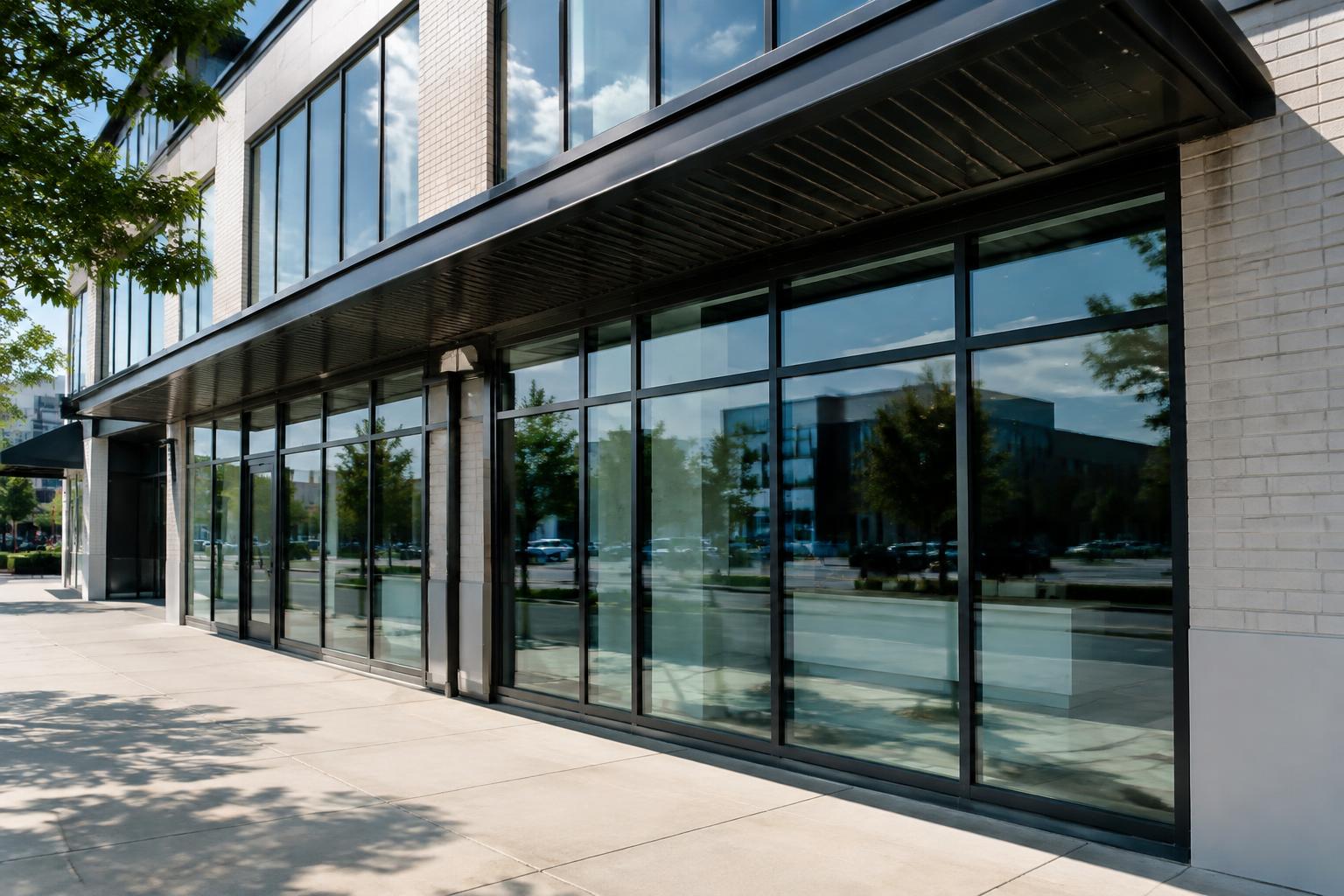
Retail glass earns its keep. It shows the product, pulls people off the sidewalk, and makes a small space feel open. It also lets in heat, fades merchandise, and is the easiest part of the building to break or deface.
Storefront window film addresses all of that on the glass you already have, which matters when you are a tenant and replacing glazing is not on the table.
Three different jobs, three different films
1. Solar control — comfort and merchandise
Downtown Walnut Creek storefronts on the sun side get hours of direct exposure. That shows up as a hot entry area, an overworked HVAC system, and display goods that fade unevenly. Solar control film cuts heat gain and blocks more than 99% of UV, so window displays hold their color much longer and the front of the store stops being the worst place to stand.
2. Safety and security film — glass retention
Security film is a thick, tear-resistant layer bonded to the interior of the glass. It does not make glass unbreakable; it holds broken glass together. That turns a quick smash-and-grab into a loud, slow, repeated effort — and it keeps shattered glass out of the sales floor after an impact or accident. For street-level retail this is often the highest-value film on the building.
3. Anti-graffiti film — a sacrificial layer
Scratching, acid etching, and tagging on storefront glass are expensive precisely because replacing large panes is expensive. Anti-graffiti film is optically clear and takes the damage instead of the glass. When it gets hit, we remove the film and install a new layer — a fraction of the cost and downtime of reglazing.
Can you combine them?
Yes, and many storefronts do: solar control on sun-exposed elevations, security film on entry and street-facing panes, anti-graffiti film on alley-side or high-traffic glass. Some products combine tinting and safety thickness in a single film, which is often the cleanest solution for a corner unit.
Signage, visibility, and landlord approval
Retailers worry that film will make the store look closed. Modern films are far more transparent than the mirrored products people remember, and we can hold the interior view while still cutting heat. If your lease or the shopping center's design guidelines restrict exterior appearance, we provide spec sheets and visible light transmission numbers for approval before anything is installed.
Scheduling around trading hours
Storefront work is usually done before opening or after close, one elevation at a time. Most single-tenant retail spaces are finished in a day. Restaurants and cafés with fixed seating along the glass take a little longer because we need clear access to each pane.
Getting a number you can budget against
Storefront quotes depend on pane count, pane size, access, and which film does which job. We measure on site and give a written scope you can hand to a landlord or an insurance carrier.
We work throughout Walnut Creek, Concord, Lafayette, Danville, and the greater East Bay from our base in Dublin. Commercial estimates are free.