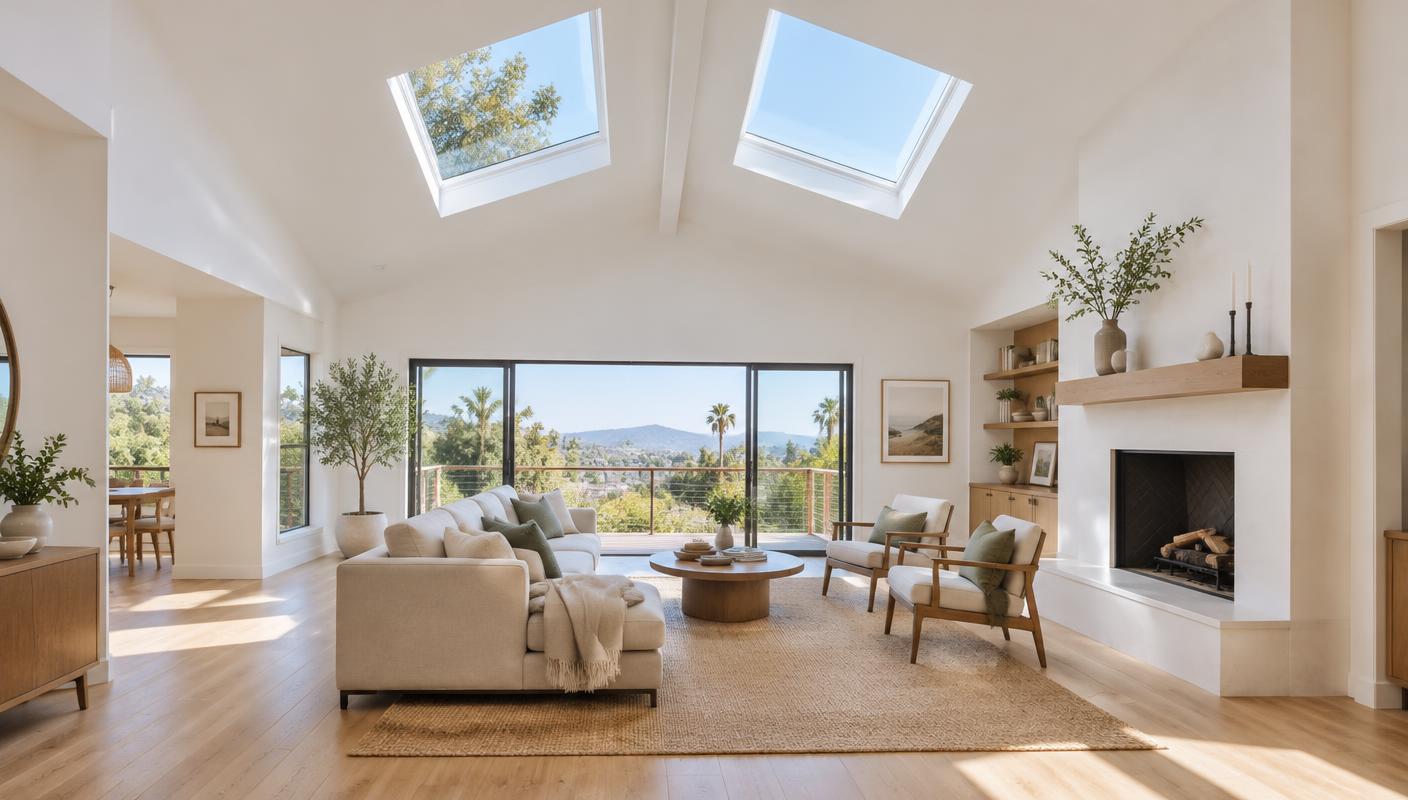
Skylights are one of the best ways to bring natural light into a Bay Area home. They are also the windows that face the sun most directly. From late spring through early fall, a skylight over a kitchen, stairwell, or living room can create a hot spot, harsh glare on screens, and faded floors or furniture directly beneath it.
Skylight window film is a thin, professionally installed film applied to the interior side of the glass that reduces solar heat, glare, and ultraviolet (UV) rays while keeping much of the daylight. It is usually far less disruptive and less expensive than replacing the skylight unit.
This guide is for Tri-Valley and East Bay homeowners considering professional residential window tinting for skylights rather than DIY film kits.
Why skylights overheat rooms
A vertical window receives the sun at an angle for part of the day. A skylight faces the sky, so it often takes in strong midday sun when solar heat is at its peak. Warm air also collects near vaulted ceilings, and the area under a skylight can feel noticeably warmer than the rest of the room. In homes in Dublin, Pleasanton, San Ramon, Livermore, and Walnut Creek, where summer afternoons regularly get hot, that heat can increase air-conditioning use.
What skylight tint can improve
- Heat: Solar control films reject a portion of the sun's energy before it warms the room. Compare the film's total solar energy rejected (TSER) rating.
- Glare: Reducing visible light makes TVs, computer screens, and kitchen work areas more comfortable.
- UV fading: Quality window films block up to 99% of UV rays, which helps slow fading of hardwood floors, rugs, artwork, and furniture under the skylight. See our UV and fade protection films.
- Privacy and diffusion: If a skylight faces a neighbor's second story, a frosted film can soften light and block direct views.
Choosing the right film for a skylight
The best skylight film depends on how much light you want to keep. Ask to see these numbers for each option, rather than judging by darkness alone:
- Visible light transmission (VLT): how much daylight passes through. A higher VLT keeps the room brighter.
- TSER: how much total solar heat the film rejects.
- Visible light reflectance: how mirror-like the film looks. Reflective films often reject more heat but change the appearance of the glass.
Spectrally selective and ceramic films can reject a meaningful amount of heat while keeping skylights bright. Darker or reflective films usually offer stronger heat and glare reduction but make the room dimmer. For a closer look at these ratings, read window film performance ratings explained.
Glass compatibility matters
Many skylights use dual-pane, tempered, or laminated glass, and some older units are acrylic domes. Not every film is suitable for every glass type. Film absorbs some heat, so an installer should check the glass type, size, and sun exposure before recommending a product. Acrylic or polycarbonate domes generally are not good candidates for standard window film. Learn more about window film on dual-pane glass.
What professional installation involves
Skylights are usually high, angled, and hard to reach, so they are not a good DIY project. A professional installation typically includes:
- Confirming the glass type and measuring each pane.
- Protecting floors and furniture below with drop cloths.
- Safely setting up ladders or scaffolding for high ceilings.
- Cleaning the glass thoroughly so dust does not get trapped under the film.
- Applying and trimming the film precisely to the edges.
Like other window films, skylight film needs time to cure. Small water haze can be normal for a short period after installation.
Skylight film vs. shades or replacement
Skylight shades block light but can be costly, hard to operate on high ceilings, and do not stay open while keeping heat out. Replacing a skylight is a larger project. Window film keeps the view of the sky and most of the light while reducing heat and UV. Compare more options in window film vs. window replacement.
Get a skylight film estimate
Low Price Window Tint installs residential window film throughout Dublin, the Tri-Valley, and the greater Bay Area. Send us photos of your skylights, the approximate size, and the room below, and we will recommend film options that fit your glass and how bright you want the room. Request a free estimate or call 925-515-2979.