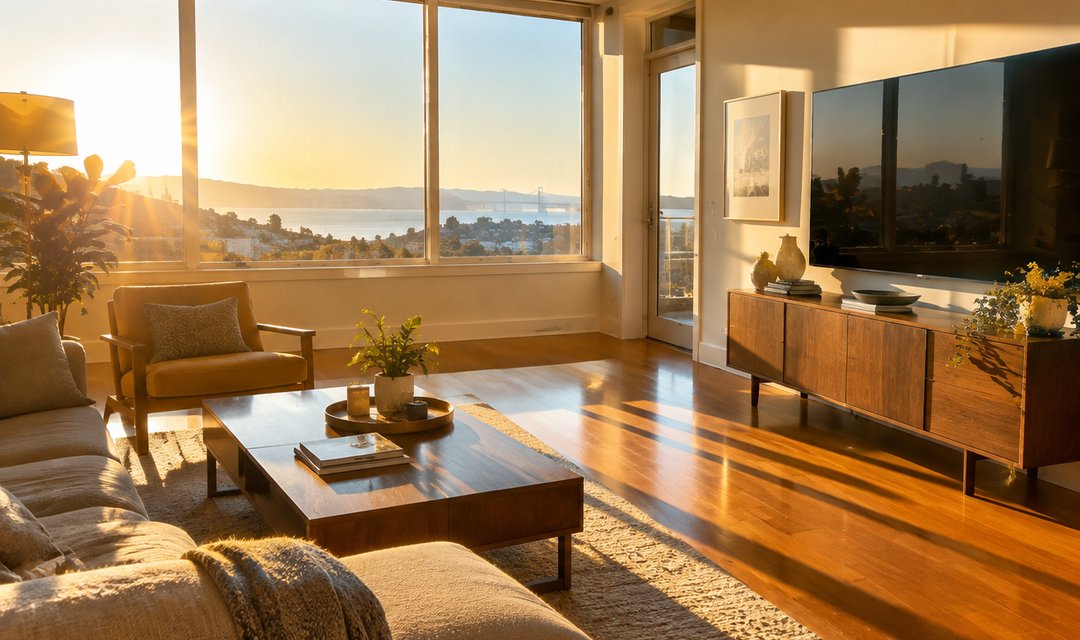
Every year around Thanksgiving we get the same calls from Dublin, Pleasanton, San Ramon and Livermore homeowners: "In the summer this room was fine. Now the sun hits me right in the eyes at 3 p.m., I can't see the TV, and my floor is getting blasted."
You're not imagining it. Winter sun in the Tri-Valley behaves very differently from summer sun, and in many homes glare is actually worse from November through February. This guide explains why, answers the question we hear most this time of year ("won't tint make my house colder?"), and shows which window films fix winter glare without making your home dark.
Why the winter sun is harder on your windows
It comes down to the angle of the sun.
Dublin sits at about 37.7° north latitude. At midday on the summer solstice, the sun is roughly 76° above the horizon. It's almost overhead, so roof overhangs and eaves block much of it before it reaches your glass.
At midday on the winter solstice, the sun peaks at only about 29° above the horizon. In the late afternoon it's even lower. That low sun:
- Shines straight through the glass instead of down onto the patio, so it reaches deep into the room.
- Gets under your overhangs, which were designed to shade summer sun, not winter sun.
- Lands right at eye level, on TV screens, computer monitors and kitchen counters.
South- and west-facing windows take the biggest hit. That's why a family room that felt fine in July can feel unusable at 3:30 p.m. in December.
Winter glare is only half the problem: UV and fading don't take a break
Many people assume fading is a summer issue. It isn't. Because winter sun reaches farther into the room, it often hits hardwood floors, rugs, sofas and artwork that never see direct sun in summer.
- According to the International Window Film Association (IWFA), clear single-pane glass lets in about 75% of the sun's UV, and standard dual-pane glass still lets in around 60%.
- UV is the largest single cause of fading, but visible light and heat also contribute. Industry research attributes roughly 40–45% of fading to UV, about 25% to heat and about 25% to visible light.
- Quality professional window films block 99%+ of UV, which greatly slows fading. No film stops it completely, but it removes the biggest cause.
If you've noticed a lighter stripe on your floor where the winter sun lands, that's the pattern. Learn more in our guide to what causes furniture and floor fading.
"Will window tint make my house colder in winter?" The honest answer
This is the question that stops people from tinting in the colder months, so here's a straight answer.
1. Standard solar-control film doesn't make your home noticeably colder in our climate. Solar film reduces the sun's heat coming in. On a sunny winter day it does cut some "free" solar warmth through those windows. But in the Tri-Valley, sunny rooms with big south or west glass usually overheat on clear winter afternoons, even with the furnace off. Most homeowners find the room simply becomes more even: less blazing sun in the afternoon, less of a hot-and-cold swing.
2. It doesn't make your windows lose more heat. A standard solar film doesn't make the glass leak more heat at night. Your window's insulating value stays about the same.
3. Window film is not insulation. If a room feels cold because of drafts or old single-pane glass, film won't fix that. That's a job for weatherstripping, sealing or new windows. What film does in winter is control the sun: less glare, less fading and fewer hot spots on sunny afternoons.
4. One technical caution most companies skip. Some newer dual-pane windows already have a low-E coating. Most have it on an inside surface between the panes, and film can usually be added without losing the glass's benefit. If the coating is on the room-side surface of the glass, the IWFA notes that adding film can reduce the glass's own heat-loss benefit. Before we recommend anything, we identify your glass type, the low-E location and whether the panes are tempered or annealed, so the film is both effective and covered by the manufacturer's warranty. More in our guide: Can window film be installed on Low-E glass?
Which window film is best for winter glare?
The right film depends on how much glare you have and how much light you want to keep. Here's how we usually guide Tri-Valley homeowners:
- Glare on the TV or computer, but you love natural light: ceramic films like Solar Gard PureVue 50/60 or Avery PerLite Ceramic 50. Natural, low-reflective look, softer light and 99% UV protection.
- Strong low sun across a family room or kitchen: dual-reflective films like Solar Gard TrueVue 30/40 or Avery DR OptiTune 30. Noticeably less glare, a good view out and low interior reflection at night.
- Blinding west sun, and daytime privacy matters too: reflective films like Solar Gard Silver 20 or 35. Maximum glare and heat control, with a mirror look outside during the day.
- Floors or furniture fading, but you don't want any tint look: a near-clear ceramic like Avery PerLite 70. Almost invisible, with 99% UV protection plus some glare reduction.
Not sure about darkness? A small sample on one pane never looks the same as a whole room of filmed glass. We show photos from real installs so you can see the finished look before deciding. Our guide Does residential window tint make your home too dark? covers this in detail.
Why not just close the blinds?
You can, and on the worst afternoons many people do. But blinds trade one problem for another:
- You lose the view and daylight right when days are shortest.
- Blinds still let UV through the slats and around the edges, so fading continues.
- You end up turning on lights at 3 p.m.
Window film works all the time with no adjusting. Many of our customers keep their blinds open all winter after filming the glass.
Is winter a good time to install window film in the Bay Area?
Yes, and it's one of the best times:
- You can see exactly where the problem is. The glare is happening right now, so it's easy to choose which windows need film and how dark it should be.
- Scheduling is easier. Spring and summer are our busiest seasons. Winter usually means faster appointments.
- Mild Tri-Valley winters are fine for curing. Film can look slightly hazy or show small water pockets for a few weeks after install. That's normal, and curing just takes a bit longer in cool weather. Per IWFA guidelines, typical films cure within about 30–60 days. See why window film bubbles after installation.
- You're protected before spring and summer. The same film that fixes December glare cuts July heat.
A quick checklist before you call
- Photos of each window with the glare problem, plus one photo showing the whole wall.
- Approximate sizes (width × height of the glass) if you can measure.
- Which direction the windows face, if you know.
- What bothers you most: glare, fading, heat, cold spots or privacy.
- Window details if you know them: single or dual pane, age, brand (Milgard, Anlin, etc.).
We'll check glass compatibility and recommend the film that solves your problem, not just the most expensive option.
Frequently asked questions
Does window film reduce glare without making my house dark?
Yes. Ceramic and light dual-reflective films reduce glare while keeping most of your natural light. Lighter films soften glare, and darker films cut it more aggressively.
Will window tint make my house colder in winter?
In the Tri-Valley's mild climate, standard solar film doesn't make homes noticeably colder. It mostly evens out sunny rooms that overheat in the afternoon. If a room feels cold from drafts, that's a sealing issue film won't fix.
Does window film help with TV glare?
Yes. Reducing the brightness coming through the window is one of the most effective fixes for screen glare, especially from low winter sun.
Do I need UV protection in winter?
Yes. Winter sun reaches deeper into rooms, and standard dual-pane glass still lets in around 60% of UV. Quality window films block 99% or more.
Can film go on my dual-pane windows?
In most cases yes, with the right film. We check the glass type, low-E coating location and window size first so the installation is safe and covered by the manufacturer's warranty. See our guide on window film and dual-pane glass safety.
How long does installation take?
Most homes are done in a few hours to one day, depending on the number of windows.
Fix winter glare this season with Low Price Window Tint
Low Price Window Tint is a Diamond Certified®, licensed window film installer based in Dublin, CA, serving Pleasanton, San Ramon, Livermore, Danville and the greater East Bay. We're an authorized Solar Gard dealer and also install Avery Dennison, Huper Optik and Edge films, all backed by manufacturer warranties and installed to IWFA standards. See our home window tinting in Dublin and UV and fade protection films.
Sun in your eyes this winter? Request your free estimate or call 925-515-2979. Send us a few photos of the problem windows and we'll recommend the right film with a clear, all-inclusive price.