If you’re evaluating window tint for your home or business in Dublin, CA, one question matters more than most: Is the installation being done to industry standards—or just “good enough”?
The International Window Film Association (IWFA) sets the benchmark for professional installation practices. These standards define what a proper installation looks like, how it should be inspected, and what results you should realistically expect.
Low Price Window Tint follows IWFA-aligned practices as part of delivering consistent, Diamond Certified warranty-backed installations.
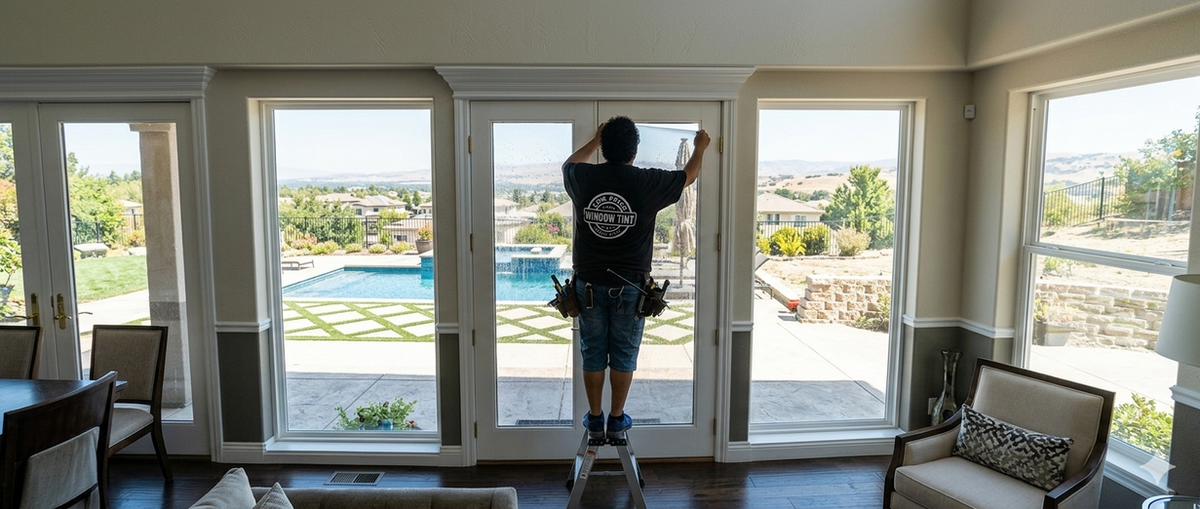
Why IWFA Installation Standards Matter
Window film performance is not just about the product—it’s about execution. Even the best film will fail if:
- It’s installed incorrectly.
- The glass compatibility is ignored.
- The curing process is misunderstood.
Manufacturers explicitly state that warranties depend on proper installation and approved glass compatibility. The hidden catch: Bad installation = no warranty protection.
The 6-Foot Inspection Rule (What “Quality” Actually Means)
One of the most misunderstood concepts in window film is how it should be evaluated. According to industry standards:
- Film should be inspected from 6–10 feet away.
- You should be looking through the glass, not directly at it.
This is critical because glass itself has imperfections, and film is not a perfect optical layer under high magnification. Close-up inspection will exaggerate normal conditions that are invisible during daily use.
Translation: If someone is judging the job from 2 inches away, they’re not using industry standards.
Edge Gaps: Not a Mistake—A Requirement for Window Film
Customers often assume that film should go edge-to-edge with zero spacing. That’s actually incorrect. IWFA-aligned installation practice requires a small edge gap (typically 1/32" to 1/16") intentionally left around the perimeter.
This allows for:
- Proper water evacuation during installation.
- Adhesive stability during curing.
- Reduced risk of peeling or lifting.
Reality check: No edge gap = higher failure risk. A slight, uniform edge gap = a professional install.
Cure Time: Where Most Customers Get It Wrong
Window film does not “finish” at installation. It goes through a curing phase where the adhesive bonds to the glass.
Typical curing timeline:
- 3 days to 2+ weeks for thin films.
- Up to 30–60+ days for thicker or security films.
- In some cases, up to 140 days depending on humidity and sunlight.
During this time, it is normal to see a hazy appearance, small water pockets, or slight distortion. Note: Safety and security films do not reach full strength until curing is complete. If an installer promises “perfect clarity same day,” it’s a red flag.
What a Proper Installation Includes
A professional installation in the Dublin area should always include:
- Film-to-glass compatibility verification: (Crucial to prevent thermal stress cracks).
- Clean surface preparation: Minimizing contaminants.
- Controlled environment: Ensuring the best possible finish.
- Post-installation education: Explaining the curing process clearly.
Common Misconceptions (That Cost You Money)
- Myth 1: “A perfect install has zero flaws.” (Reality: Minor imperfections are normal within industry standards).
- Myth 2: “It should look perfect immediately.” (Reality: The curing phase changes appearance before final clarity).
- Myth 3: “All installers follow the same standards.” (Reality: Most don’t—it takes discipline and training).
What This Means for Homeowners in Dublin, CA
If you’re comparing quotes, don’t just compare price. Ask the tough questions:
- Do you follow IWFA installation standards?
- How do you handle cure time expectations?
- Are you verifying film-to-glass compatibility for my specific windows?
If they can’t answer clearly, you’re not comparing professionals—you’re comparing risk levels.
Get a Professional Evaluation
If you want a quote based on proper installation standards—not shortcuts—reach out to the team at Low Price Window Tint. We serve Dublin, CA, and the surrounding Tri-Valley area with precision and transparency.