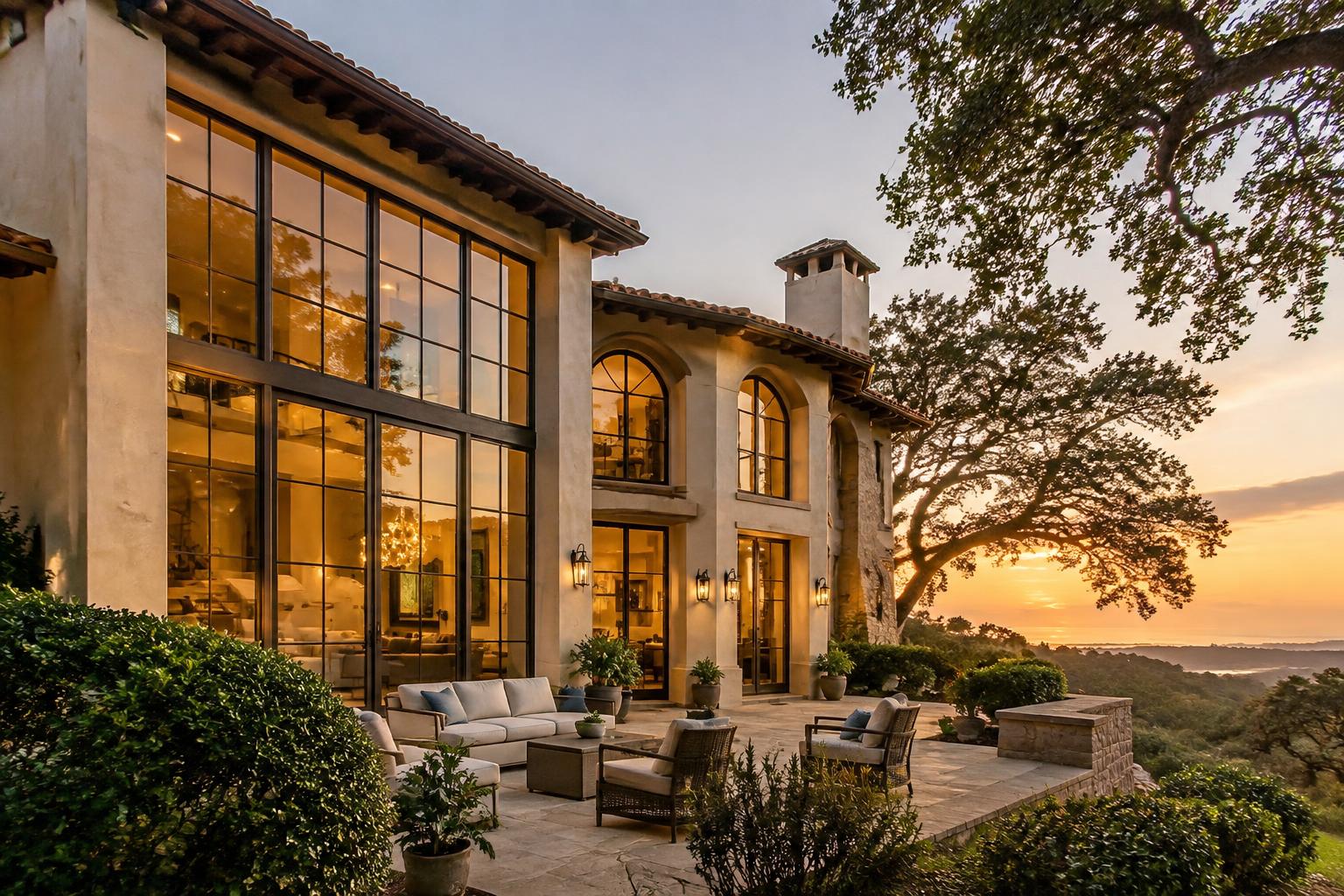
Alamo homes are designed around light. Two-story great rooms, walls of sliding glass, clerestory bands, and windows placed to frame Mount Diablo — the architecture assumes the sun is a feature, not a problem. Then August arrives, the west elevation turns into a radiator, and the hardwood floor under the window wall starts to lighten in stripes.
Residential window film is how Alamo homeowners keep the glass and lose the problems. It works on the windows you already have, requires no construction, and is invisible from inside when specified well.
What big glass does to a big home
The taller and wider the glazing, the more pronounced the issues:
- Heat pools in two-story spaces. Warm air rises, so a hot great room gets worse at the loft level, and the HVAC runs long trying to even things out.
- Glare at specific hours. Low western sun cuts across kitchen counters and living room seating for a couple of hours each day.
- Fading where the sun lands. Hardwood, wool rugs, leather, drapery, and art fade fastest on sun-facing elevations. Window film blocks more than 99% of UV — the largest contributor to fading — and reduces heat and visible glare too. No product stops fading completely, but film slows it dramatically.
Clear films for view-driven homes
In Alamo, the view is the point, so most projects call for spectrally selective ceramic film: strong heat rejection with a clear, neutral look from both sides. Where a room needs daytime privacy or a softer look, frosted and decorative films fit bathroom glass, sidelights, and transoms without blocking daylight.
We install professional-grade films from manufacturers including Solar Gard, Huper Optik, and Avery Dennison, with manufacturer warranty coverage on residential installations.
Dual-pane and low-E glass
Nearly every Alamo home built in the last few decades has dual-pane, low-E glazing. That is good for efficiency but it constrains film choice — high-absorption films on certain glass types can create thermal stress, so the film has to be matched to the glazing. We identify the glass type during the free consultation and only recommend films rated for it. If a window is not a good candidate, we tell you before any work happens.
What installation looks like
A whole-home project is typically one day of work. Expect a slight haze or small water pockets for a few days while the film cures — that clears on its own. Wait about 30 days before cleaning, then use a soft cloth and a non-abrasive cleaner; no scrapers or abrasive pads.
Start with the worst room
You do not need to film every window. Most Alamo projects start with the west-facing great room or the elevation where the floor is fading, then expand to bedrooms and other exposures later. Prioritizing by problem keeps the first phase affordable and the results obvious.
Serving Alamo and the Tri-Valley
We are based in Dublin and serve Alamo, Danville, Walnut Creek, San Ramon, Lafayette, and the surrounding East Bay. Consultations are free and done in person, because matching film to glass starts with seeing the windows.