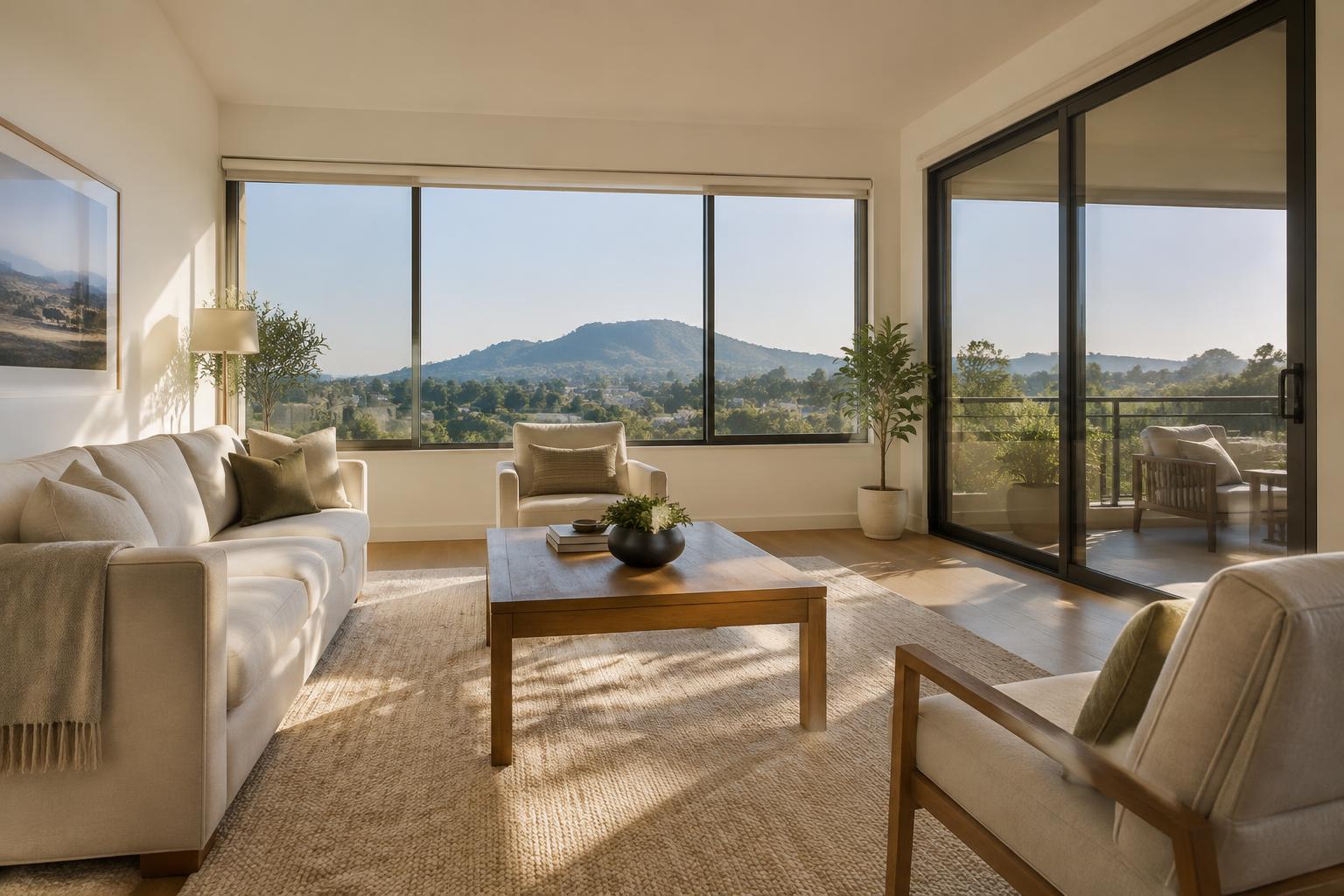
San Ramon homes tend to have a lot of glass in the places people spend the most time: two-story great rooms, sliding doors onto the patio, and upstairs bedrooms with wide west-facing windows. It looks great in the morning. By four in the afternoon, those same rooms are the reason the air conditioner never shuts off.
Why one room is always hotter
Solar heat gain through glass is the usual culprit, not an undersized HVAC system. Sunlight that passes through a window turns into heat inside the room, and it keeps arriving for hours on a west elevation. Upstairs rooms make it worse: heat that rises from the rest of the house has nowhere to go.
Homeowners usually try blinds and blackout curtains first. Those work, but they cost you the view and the daylight — and once the heat is through the glass, a curtain is already on the wrong side of the problem.
What residential window film does
Window film is applied to the interior surface of the existing glass. A quality solar control film will:
- Reject a large share of the solar heat before it enters the room
- Cut glare so screens and TVs are usable in the afternoon
- Block more than 99% of UV, which is the main cause of faded flooring, rugs, and furniture
- Even out temperatures between the sun side and the rest of the house
You keep the view and the daylight. The room simply stops acting like a greenhouse.
Which film for a modern San Ramon home
Most homes built here in the last few decades have dual-pane, often low-E glass. That narrows the safe and sensible choices:
- Ceramic film — high heat rejection with a near-clear look and no mirror effect. The most common choice for homes where appearance matters.
- Dual-reflective film — more heat rejection and daytime privacy, with a low-reflectance interior so evenings still feel open.
- Neutral light films — a lighter option for rooms that need glare control more than heat control.
HOA rules are worth checking before you choose. Many San Ramon communities limit exterior reflectivity, which effectively rules out mirrored films. We can supply spec sheets for architectural review.
Will film damage dual-pane windows?
Not when the film and glass are matched. Some high-absorption films are not appropriate for certain low-E or tempered units. We identify the glass type during the estimate and recommend only films rated for it, so the manufacturer warranty stays intact.
What installation looks like
Most homes are a one-day job. We protect floors, clean and prep each pane, install the film, and squeegee out the mounting solution. The film looks slightly hazy for a few days while it cures, which is normal — full clarity comes as the remaining moisture evaporates. Wait about 30 days before cleaning, then use a soft cloth and a non-abrasive cleaner.
Where it pays off first
If you are treating the house in phases, start with the west and southwest elevations and any two-story window wall. Those surfaces usually deliver most of the comfort improvement, and the rest can follow later.
We are based in Dublin and serve San Ramon, Danville, Pleasanton, Livermore, Walnut Creek, and the surrounding East Bay. Residential consultations are free — tell us which rooms are uncomfortable and we will look at the glass that causes it.